


News
-

Ultrasonic weld inspection to AWS D1.1 with the Dakota FX70-DL
A practical guide to using the Dakota FX70-DL for ultrasonic inspection of structural welds to AWS D1.1. The flaw detector includes the AWS toolkit for automatic calculation of the indication rating, DAC, DGS, TCG. EN 12668-1 compliant, NIST-MIL-STD calibration, 4 GB memory, download to DakMaster™.
-

Dakota CX2 vs CX4 vs CX8-DL: which thickness gauge should you choose?
A guide comparing the Dakota CX2, CX4 and CX8-DL, the three best-selling ultrasonic thickness gauges in the Dakota NDT range. Official technical specifications, differences in functions (ThruPaint™, data logger, B-Scan) and criteria for choosing the model best suited to Your industrial application.
-

DakView™: A-Scan and B-Scan analysis on a PC for advanced inspections
DakView™ is the Dakota NDT software for analysing on a PC the A-Scan and B-Scan waveforms acquired by ultrasonic instruments. Available for Windows 32/64 bit and Mac OS X, it allows post-inspection review, validation of critical measurements and integration into code-based inspection workflows.
-

DakMaster™: how to manage and archive NDT measurements on PC
DakMaster™ is the official Dakota NDT data management software: it covers the entire post-inspection workflow for thickness gauges, flaw detectors and bolt tension monitors. A single platform to download data via Bluetooth or USB, analyse it and generate professional reports in seconds.
-

AWS D1.1 and ultrasonic weld inspection: requirements and instruments
AWS D1.1 is the American reference standard for welding steel structures. Clause 6 defines the requirements for ultrasonic testing (UT) of structural welds. The Dakota FX70-DL, FX71-DL and FX81-DL flaw detectors include the AWS toolkit for automatic flaw sizing.
-
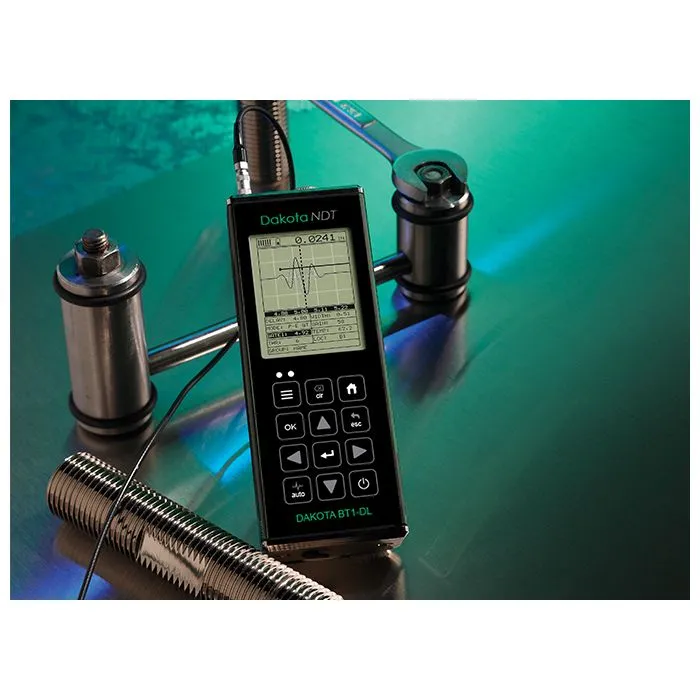
ASME PCC-1: the reference standard for controlled tightening of flanges
ASME PCC-1 is the international reference standard for the controlled tightening of bolted flanges on pressure boundaries. The guideline defines procedures for gaskets, bolts, lubrication and tension control. The Dakota BT1-DL and BT2-DL instruments provide the ultrasonic elongation measurement required by critical applications.
-
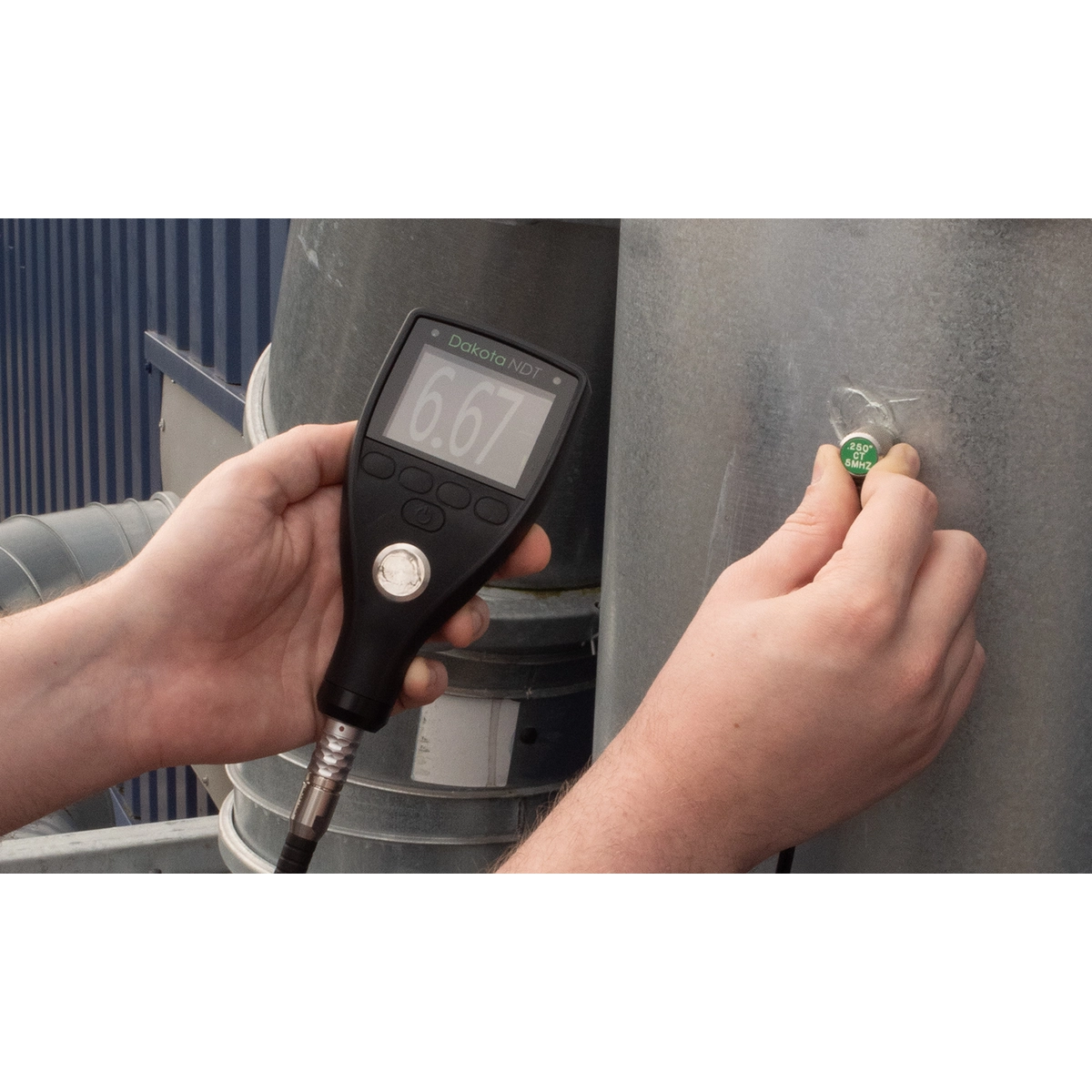
API 570 and API 653: instrumentation requirements for piping and tank inspection
API 570 and API 653 are the international reference codes for the inspection of in-service piping and atmospheric storage tanks. A guide to the practical requirements for ultrasonic thickness measurement instrumentation and to choosing compatible Dakota NDT instruments.
-
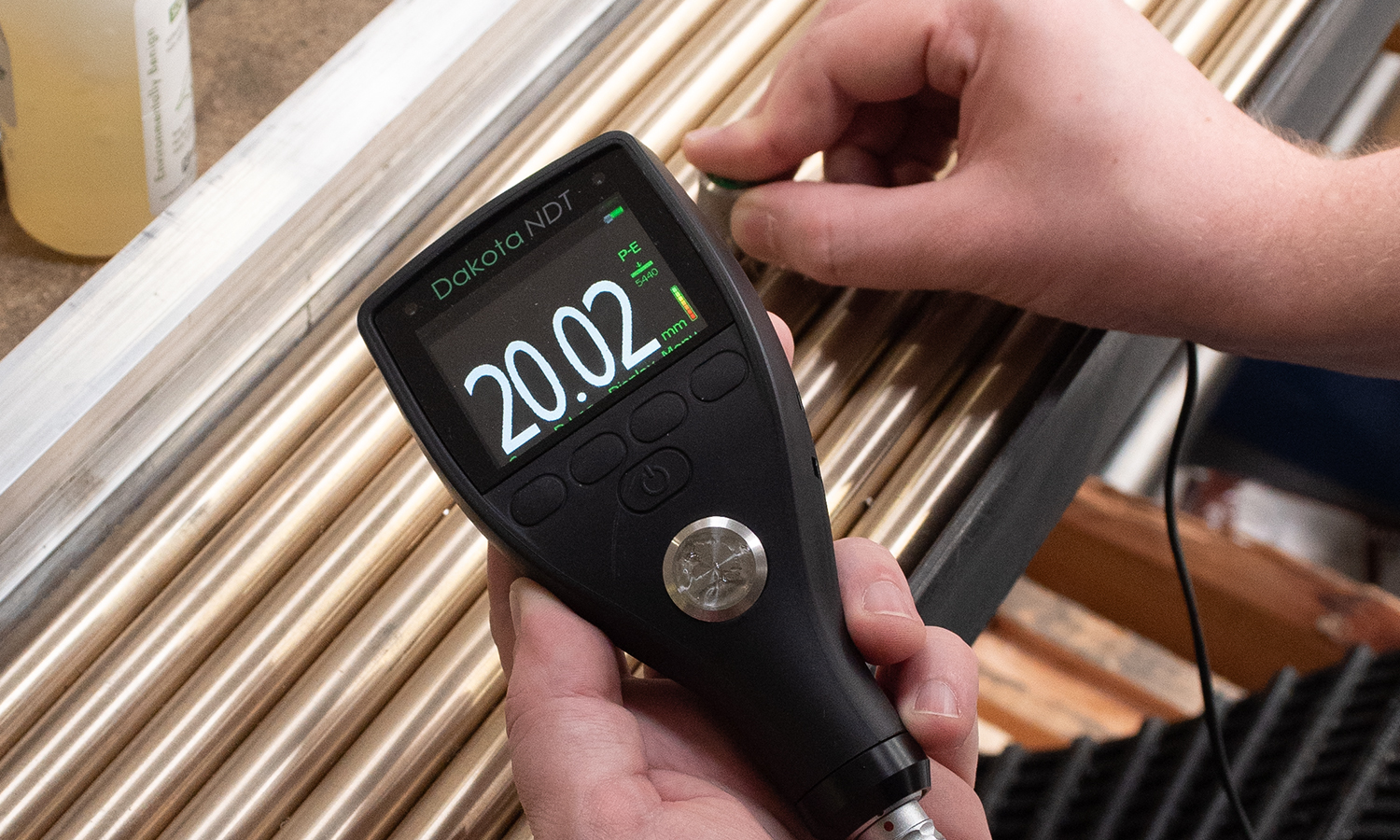
NDT standards for thickness measurement: EN 14127, ASTM E797 and EN 15317
The reference NDT standards for ultrasonic thickness measurement: EN 14127 for the measurement procedure, ASTM E797 as the American standard, EN 15317 for instrument qualification and EN 12668-1 for flaw detectors. All Dakota instruments are declared compliant.
-

Corrosion gauge vs flaw detector: when you need both
A corrosion gauge and a flaw detector use the same ultrasonic physics but solve different problems: measuring thickness versus locating internal discontinuities. A guide to understanding when one of the two is enough, when you need both and when to choose a hybrid Dakota FX instrument.
-

Dakota BT1-DL vs BT2-DL: portable or benchtop bolt tension monitor?
A comparison between the portable Dakota BT1-DL and the benchtop BT2-DL ultrasonic bolt tension monitors. Both offer 0.0001 mm accuracy and automatic temperature compensation; the BT2-DL adds the ability to measure fasteners up to 30 metres long for special applications.